Inside Bay Estate Nakheel’s 360-Home Waterfront Community
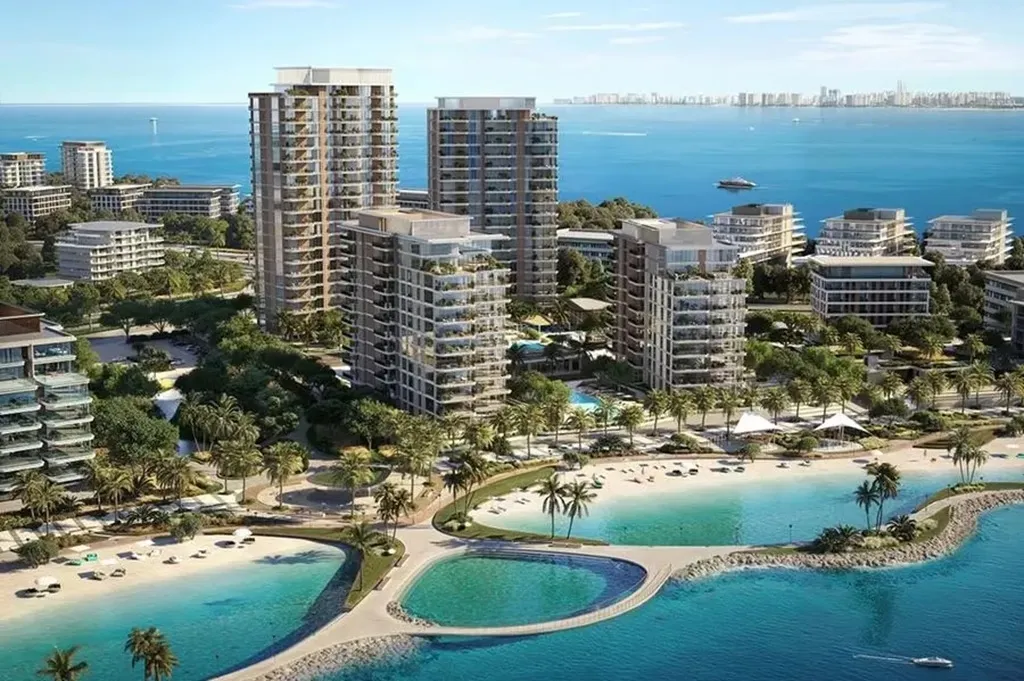 Nakheel has launched Bay Estate, a gated waterfront community on Dubai Islands with around 360 three- and four-bedroom residences. The project also includes beachfront and waterfront plots.
The development covers about 653,709 sq m, with around 2.4 km of beachfront and 6.5 km of waterfront. Its residential mix includes garden villas, attached villas and townhouses. Lagoons, beach access, green spaces and pedestrian routes form part of the plan.
Nakheel Bay Estates enters Dubai's residential market at a time when buyers have greater choice. H1 2026 recorded 80,509 residential sales worth AED 226.5 billion, with off-plan properties accounting for 71.3% of sales.
The key question for Bay Estate is how its limited residential stock performs within the much larger Dubai Islands district.
Three districts shape Bay Estate
Bay Estate is divided into Cala, Verda and Agora. Each district has a different residential setting.
Cala
Cala focuses on lagoon living. Residences sit around secluded water areas with access to the community's swimmable lagoons.
This section suits buyers seeking water views and greater privacy without requiring a direct beachfront position.
Verda
Verda gives greater emphasis to green areas and family-oriented spaces. Residences sit within landscaped surroundings and shared community areas.
Agora
Agora has a stronger social focus. Pedestrian routes and shared spaces place residents closer to community facilities.
The three districts give Bay Estate different internal settings. As a result, location within the project becomes an important part of the purchase decision.
A small residential collection on a large site
Around 360 residences is a relatively small collection for a development covering more than 653,000 sq m.
The project includes three- and four-bedroom residences across garden villas, attached villas and townhouses. Selected beachfront and waterfront plots add another layer to the product mix.
This creates different value levels within one community. A beachfront position, lagoon setting and garden location serve different buyer preferences and pricing points.
The low-density format also separates Bay Estate from apartment-led developments where the main choice often comes down to unit size and floor level.
Waterfront is central to the project
Bay Estate has around 2.4 km of beachfront and 6.5 km of waterfront. The plan also includes swimmable lagoons, beach access and marina facilities.
These features create several forms of coastal living within one development. A beachfront residence has direct coastal access. A waterfront position gives a closer relationship with the water edge. Lagoon-facing residences offer an internal water setting.
For valuation, these positions should not be treated as equal. Plot size, frontage, views, privacy and access all influence the price difference between residences.
Dubai Islands gives Bay Estate a larger market context
Bay Estate sits within Dubai Islands, a five-island destination covering about 18.6 sq km.
The wider plan targets around 62,000 residences and more than 230,000 residents. It also includes over 11,000 hotel rooms, more than 4,000 branded residences, eight marinas, two 18-hole golf courses, water transport, coastal parks and cycling routes. The islands are planned around about 57 km of coastline, including roughly 21 km of beachfront.
This scale is important for Bay Estate.
The project gains from the growth of Dubai Islands, but it also faces competition from future residential developments across the same destination.
Its long-term position therefore depends on how well its smaller residential format stands apart as the wider district develops.
Connectivity links the project to established Dubai
Dubai Islands connects to mainland Dubai through three bridges linked to the Al Shindagha Corridor.
Dubai International Airport is around 10 km away, while Downtown Dubai is about 15 km away.
This gives Bay Estate a coastal location without placing it far from major parts of the city.
Airport access also supports international owners who spend part of the year in Dubai.
At the same time, Dubai Islands remains under development. Current access and future infrastructure should therefore be considered separately when assessing the project.
Infrastructure is moving beyond the masterplan stage
Dubai Islands already has major infrastructure and residential construction underway.
In April 2026, nakheel awarded a AED 527 million infrastructure contract for Island B.
Nakheel is also developing Bay Villas, a 636-residence community with townhouses, semi-detached villas, garden villas, waterfront villas and beachfront villas. Its construction contract is worth AED 2.6 billion.
Nakheel's June 2026 update reported 16.67% overall construction progress. These projects provide a clearer view of how the wider district is taking shape.
Bay Estate enters a selective villa market
Dubai's residential market remains active, but buyers are becoming more selective.
Current market conditions place greater focus on developer reputation, location, property quality, pricing and long-term investment potential.
Bay Estate benefits from a limited number of residences and a low-density setting. Dubai's villa segment also continues to see strong demand. The larger issue is future supply.
Dubai Islands targets around 62,000 residences, so Bay Estate competes within a much larger future market. Its 360 residences represent a small share of that pipeline.
For investors, this creates a simple question: does the project's waterfront position, low density and district planning support a lasting premium after other communities arrive?
Bay Estate versus Bay Villas
Bay Estate and Bay Villas are both Nakheel projects on Dubai Islands, but their formats differ.
Bay Estate
• Around 360 residences
• Three- and four-bedroom residences
• Garden villas, attached villas and townhouses
• 2.4 km beachfront
• 6.5 km waterfront
• Three districts: Cala, Verda and Agora
Bay Villas
• 636 residences
• Five property types
• Townhouses and several villa formats
• Larger residential collection
The comparison is therefore less about which project is better and more about the specific product, location and price within each development.
The investment case
Bay Estate has several clear strengths: limited residential stock, a large site, extensive waterfront, three distinct districts and proximity to central Dubai and the airport.
The main consideration is future competition.
Dubai Islands is planned as a major residential and hospitality destination. That growth supports infrastructure and services, but it also brings additional supply.
For investors, entry price and the exact waterfront position therefore remain central to the decision. Payment structure, plot size and delivery timing also influence the potential return.
Final view
Bay Estate gives Dubai Islands a relatively small villa and townhouse community within a much larger coastal development.
Its strongest feature is the relationship between 360 residences, a 653,709 sq m site and 8.9 km of combined beachfront and waterfront. The three districts add further differences within the project.
The wider Dubai Islands development provides another layer of potential. Roads, residential projects, hospitality and public facilities are already progressing.
The key issue is future supply. Bay Estate's limited size gives it a distinct position, but its long-term performance depends on pricing and how the wider Dubai Islands market develops.
For end users, the project offers a low-density coastal setting with access to established parts of Dubai. For investors, the strongest analysis starts with the individual residence rather than the project name.